Residential Facilities Management Sydney covers everything from preventive maintenance and building inspections to daily operations, contractor coordination, and safety compliance. Professional facilities management helps property owners, strata managers, and building managers protect asset value, reduce reactive costs, and keep residential buildings running efficiently.
Managing a residential building involves far more than fixing things when they break. Behind every well-maintained apartment complex or residential community is a structured system of maintenance schedules, compliance checks, contractor coordination, and daily operational oversight. For property owners and strata managers across Sydney, getting this right is the difference between a building that runs smoothly and one that generates constant complaints.
Residential Facilities Management Sydney has grown into a recognised discipline for good reason. Sydney’s residential property market is competitive, and buildings that are poorly maintained lose value quickly. Owners corporations face increasing pressure to manage costs while meeting safety obligations and resident expectations. Professional facilities management provides the framework to do all of this effectively.
This guide explains what residential facilities management covers, how it differs from routine maintenance, what it looks like in daily practice, and what to consider when choosing a provider in Sydney.
What Is Residential Facilities Management?
Residential facilities management is the coordinated oversight of a building’s physical assets, systems, and daily operations. It covers maintenance planning, building inspections, contractor management, safety compliance, essential services coordination, and the ongoing support needed to keep a property in good working order.
Facilities management is broader than property management. Property management typically focuses on tenancy, leasing, and rent collection. Facilities management focuses on the physical building—its condition, its systems, and its operational performance.
For residential buildings in Sydney, this means managing everything from lifts and fire safety systems to common-area cleaning, garden maintenance, and the coordination of trade contractors for repairs.
Routine Maintenance vs. Broader Facilities Management: What’s the Difference?
Many building managers conflate routine maintenance with facilities management. They are related but not the same.
Routine maintenance refers to scheduled tasks—replacing light globes, servicing air conditioning units, checking fire extinguishers. These tasks follow a fixed schedule and are relatively predictable.
Facilities management encompasses routine maintenance but goes further. It includes strategic planning, risk assessment, contractor oversight, compliance monitoring, issue tracking, budget management, and daily operational support. The table below illustrates the distinction clearly.
| Routine Maintenance | Broader Facilities Management |
| Scheduled, recurring tasks | Strategic oversight of all building functions |
| Reactive repairs | Preventive and predictive planning |
| Single trade focus | Multi-contractor coordination |
| Task completion | Performance and compliance monitoring |
| Minimal stakeholder communication | Regular reporting to owners and strata |
| Limited scope | Covers safety, systems, operations, and presentation |
Understanding this distinction helps property owners and strata managers set realistic expectations and allocate resources effectively.
Key Areas Covered by Residential Facilities Management in Sydney
Preventive and Reactive Maintenance
Preventive maintenance is the foundation of effective building management. Rather than waiting for something to fail, a structured maintenance program identifies risks early and schedules servicing before problems develop.
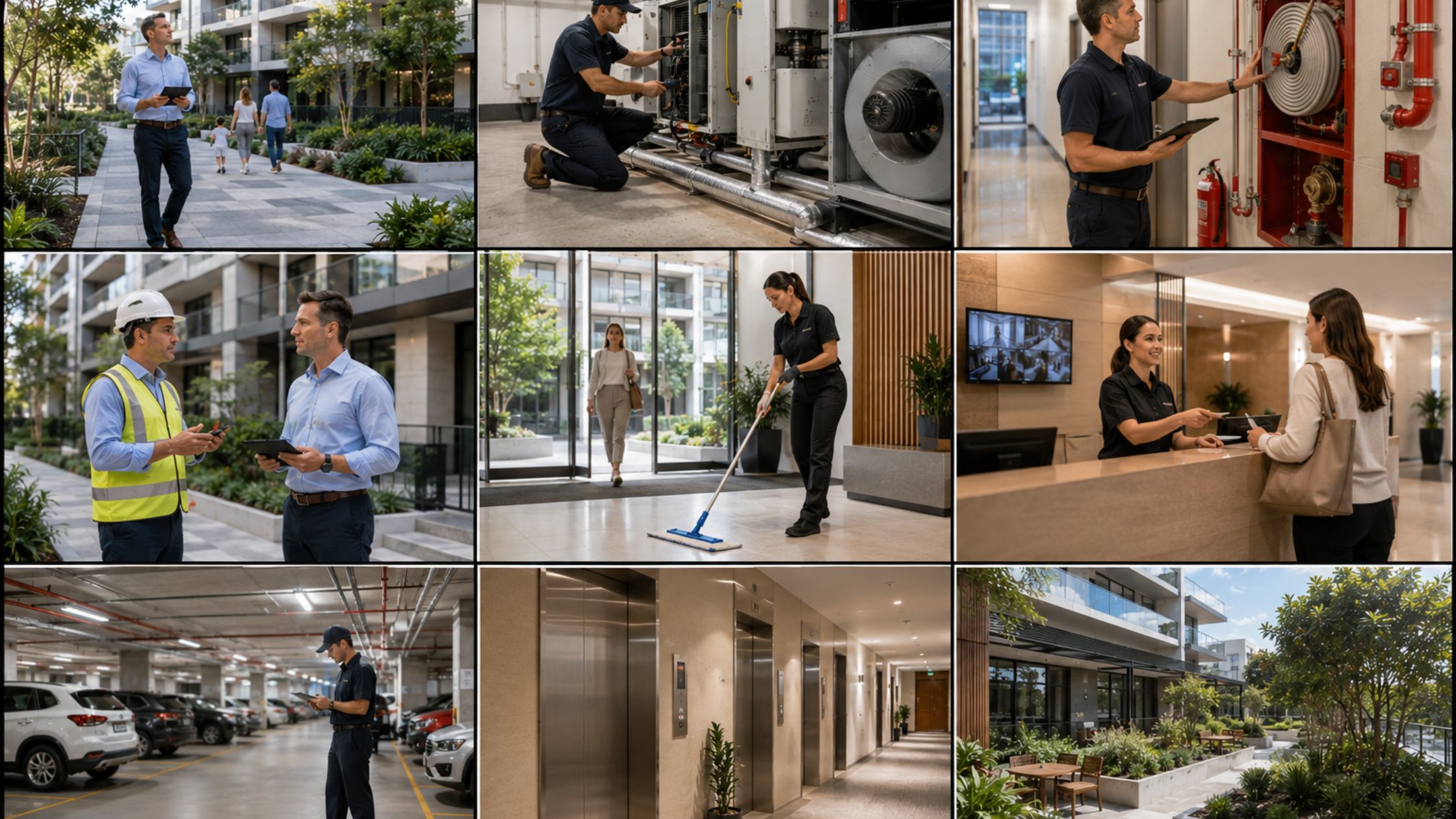
For Sydney residential buildings, this typically includes regular servicing of HVAC systems, plumbing checks, lift maintenance, waterproofing inspections, and the testing of essential fire safety equipment. Preventive programs reduce emergency callouts, extend the lifespan of building assets, and help control long-term costs.
Reactive maintenance still occurs—pipes leak, doors jam, lights fail. The key is having a clear process for logging, prioritising, and resolving these issues promptly. A professional facilities management team handles reactive issues systematically, ensuring nothing falls through the cracks.
Building Inspections
Regular building inspections are essential to identifying defects, safety risks, and areas of deterioration before they escalate. Inspections cover common areas, car parks, rooftop access points, mechanical plant rooms, and building exteriors.
Detailed inspection reports give owners corporations and strata managers a clear picture of the building’s current condition and inform maintenance planning and budget decisions.

Common-Area Upkeep and Property Presentation
The condition of common areas directly affects resident satisfaction and property value. Lobbies, corridors, lift cars, stairwells, car parks, gardens, and pool areas all require consistent attention.
Residential facilities management coordinates cleaning, landscaping, waste management, and general presentation to ensure these spaces meet the standards residents and visitors expect. In Sydney’s competitive apartment market, well-presented buildings attract better tenants and support stronger resale values.
Safety and Compliance Support
Residential buildings in New South Wales must comply with a range of legislative and regulatory requirements. These include fire safety obligations, essential services maintenance, WHS (Work Health and Safety) requirements, and strata-specific compliance standards.
Facilities management helps buildings meet these obligations by scheduling statutory inspections, coordinating compliance certifications, maintaining records, and identifying non-conformances before they become legal liabilities. For owners corporations and building managers, this level of support reduces risk significantly.
Contractor and Vendor Coordination
Coordinating trade contractors is one of the most time-consuming aspects of residential building management. A facilities management team handles contractor selection, scheduling, access coordination, quality oversight, and invoice verification.
This multi-contractor approach ensures that plumbers, electricians, lift technicians, pest controllers, and cleaning crews operate within a managed framework—reducing delays, duplication, and cost overruns. It also provides a single point of accountability for all maintenance activity.
Building Systems and Essential Services
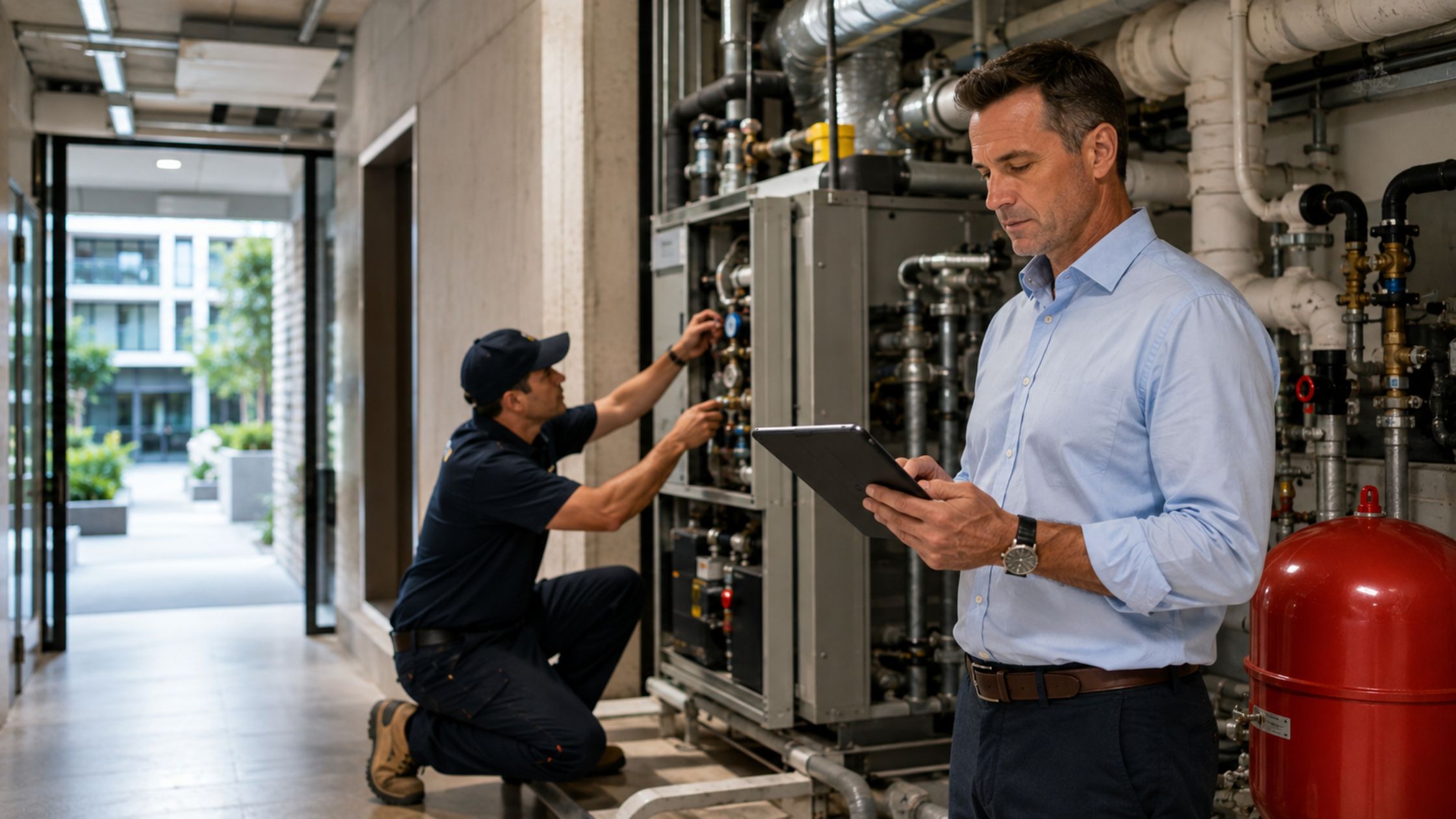
Residential buildings rely on interconnected systems—fire suppression, emergency lighting, access control, intercom systems, pumps, and mechanical ventilation. These systems require specialist servicing and ongoing monitoring.
Facilities management coordinates essential services contractors, maintains service records, and ensures critical systems remain operational. When a system fails or triggers an alert, a facilities management team responds promptly with the right contractors.
Daily Operational Support and Issue Reporting
Daily operations in a residential building involve a constant flow of activity—resident requests, contractor access, parcel management, move-in and move-out coordination, and general building oversight.
A facilities management team provides structured daily support, logging issues, communicating with stakeholders, and ensuring the building operates without unnecessary disruption. Clear issue reporting and response protocols mean residents and owners are kept informed throughout any resolution process.
Why Proactive Facilities Management Matters for Sydney Residential Buildings
Reactive management is expensive. Emergency repairs cost more than planned maintenance, and deferred maintenance compounds over time—leading to larger, costlier remediation projects.
Proactive residential facilities management reduces these costs by identifying problems early, planning maintenance strategically, and ensuring building systems are regularly serviced. For owners corporations in Sydney, where building maintenance levies are closely scrutinised, a proactive approach is also easier to justify financially.
Beyond cost, proactive management supports resident wellbeing, reduces safety risks, and protects the long-term value of the property. A building that is consistently well-maintained retains value far more effectively than one managed reactively.
What to Look for When Choosing a Facilities Management Provider in Sydney
Not all facilities management providers offer the same level of service. When evaluating options, property owners, strata managers, and owners corporations should consider the following:
- Industry experience — Does the provider have demonstrated experience managing residential buildings in Sydney specifically?
- Scope of services — Do their services cover the full spectrum, from preventive maintenance and compliance support to daily operational management?
- Communication and reporting — Do they provide regular, transparent reporting to stakeholders?
- Contractor network — Do they have established relationships with qualified, insured tradespeople across relevant disciplines?
- Responsiveness — Can they demonstrate clear processes for issue logging, escalation, and resolution?
- Cost transparency — Are their pricing structures clear and easy to understand?
Choosing the right partner is a long-term decision. A facilities management provider should function as a genuine operational partner, not just a task-completion service.
How Promenade BM Supports Residential Facilities Management in Sydney
Promenade BM is a Sydney-based building management company that offers a range of facilities management services for residential buildings and strata communities. Their approach focuses on proactive issue resolution, contractor coordination, compliance support, and transparent stakeholder communication.
Promenade BM‘s services include building management, facilities management, defects management, concierge services, cleaning, landscaping, handyman and remedial works, and remote building management for smaller buildings. This breadth of service means residential building managers and owners corporations can consolidate their facilities management needs through a single, experienced provider.
For residential communities looking for structured, professional property facilities management in Sydney, Promenade BM provides a practical and accountable option worth considering.
Take the Next Step Toward Better Building Management
Effective Residential Facilities Management Sydney is not a luxury—it is a fundamental part of protecting property value, managing operational risk, and meeting the expectations of residents and owners corporations alike.
Whether you manage a mid-rise apartment complex, a boutique residential building, or a large strata community, a structured facilities management approach makes a measurable difference. The key is working with a provider that understands the specific demands of Sydney’s residential property environment.
Contact Promenade BM today to discuss your building’s facilities management requirements. Their team is available to provide professional guidance and tailored service solutions for residential buildings across Sydney.
Frequently Asked Questions
Q1. What does residential facilities management include?
Residential facilities management covers preventive and reactive maintenance, building inspections, common-area upkeep, contractor coordination, safety and compliance support, essential services management, and daily operational oversight. The scope varies by building size and complexity.
Q2. How is facilities management different from property management in Sydney?
Property management focuses on tenancy, leasing, and rent. Facilities management focuses on the physical building—its maintenance, systems, compliance, and daily operations. Many residential buildings require both, but they serve distinct functions.
Q3. How often should a residential building in Sydney be inspected?
Inspection frequency depends on building age, size, and condition. Most well-managed residential buildings conduct formal inspections quarterly, with specific systems—such as fire safety equipment—inspected according to statutory schedules set by NSW regulations.
Q4. Why should a Sydney residential building use a professional facilities management provider?
Professional facilities management reduces reactive maintenance costs, improves compliance, extends the life of building assets, and provides structured accountability for all operational activity. For owners corporations and strata managers, it also reduces the administrative burden of coordinating multiple contractors and managing ongoing maintenance obligations.