Every commercial property throws up the occasional defect. A hairline crack here, a stain on the ceiling there. The challenge isn’t noticing these issues—it’s working out which ones demand immediate action and which can wait. Treat every defect as urgent, and you’ll burn through your maintenance budget fast. Treat a serious issue as minor, and you risk safety incidents, compliance breaches, or far greater repair costs down the track.
This is where Building Defects Management Sydney practices become essential. A structured approach to identifying, assessing, and prioritising defects helps property owners and managers make confident decisions, rather than reactive ones. It also protects occupants, tenants, and the long-term value of the building itself.
In this guide, we’ll break down how to categorise defects by severity and urgency, what factors should influence your decision-making, and when it’s time to bring in a professional. We’ll also look at how a considered approach to Building Defects Management Sydney can save you time, money, and stress.
Why Prioritising Building Defects Matters
Not every defect carries the same weight. A loose handrail and a crumbling structural beam both need fixing, but they don’t belong in the same queue. Prioritisation ensures that genuinely urgent problems get addressed before they escalate, while lower-risk issues are scheduled sensibly.
Without a clear prioritisation process, property managers often fall into one of two traps. They either spend money reactively on whatever complaint comes in loudest, or they delay repairs until a defect becomes a crisis. Both approaches are costly. Most importantly, both can expose building owners to liability if a known hazard is left unaddressed.
A considered Building Defects Management Sydney strategy helps avoid these pitfalls. It creates a transparent, defensible process for deciding what gets fixed, when, and why.
Understanding Defect Categories: Critical, High, Moderate, and Low Priority
Defects generally fall into four broad categories. However, the exact classification always depends on the specific circumstances and findings of a proper inspection.
Critical Defects
These pose an immediate risk to people or property. Examples include signs of structural instability, falling hazards, or exposed electrical components. Critical defects require urgent attention and, in most cases, immediate professional assessment.
High-Priority Defects
These may not present an immediate danger but can escalate quickly if left unattended. Significant water ingress, for example, can lead to mould growth, timber decay, or further structural damage within weeks.
Moderate-Priority Defects
These require repair but don’t present an identified immediate threat. Think faulty building components or minor cracking that hasn’t shown signs of progression. Left too long, though, moderate defects can become more expensive to fix.
Low-Priority Defects
Cosmetic issues—scuffed paintwork, minor surface blemishes—generally fall here. They have limited immediate impact but shouldn’t be ignored indefinitely, as deterioration can still occur over time.
How to Identify Defects That May Pose Immediate Safety Risks
Some warning signs should never be dismissed as “just cosmetic.” As a result, building managers should be alert to:
- Visible structural movement, such as new or widening cracks in load-bearing walls
- Sagging or bowing in ceilings, floors, or beams
- Loose render, cladding, or balustrades that could fall
- Exposed or damaged electrical wiring
- Water pooling near electrical systems
If any of these are present, suspected structural problems, falling hazards, or exposed electrical components require prompt assessment by suitably qualified professionals. Building managers and property owners should not attempt to diagnose the severity of structural or electrical issues themselves.
Assessing Common Defects: Cracks, Water Ingress, and Faulty Components
Not every crack means the building is failing, and not every leak is catastrophic. However, assuming all defects are equally minor is just as risky as assuming they’re all severe.
Structural Cracks
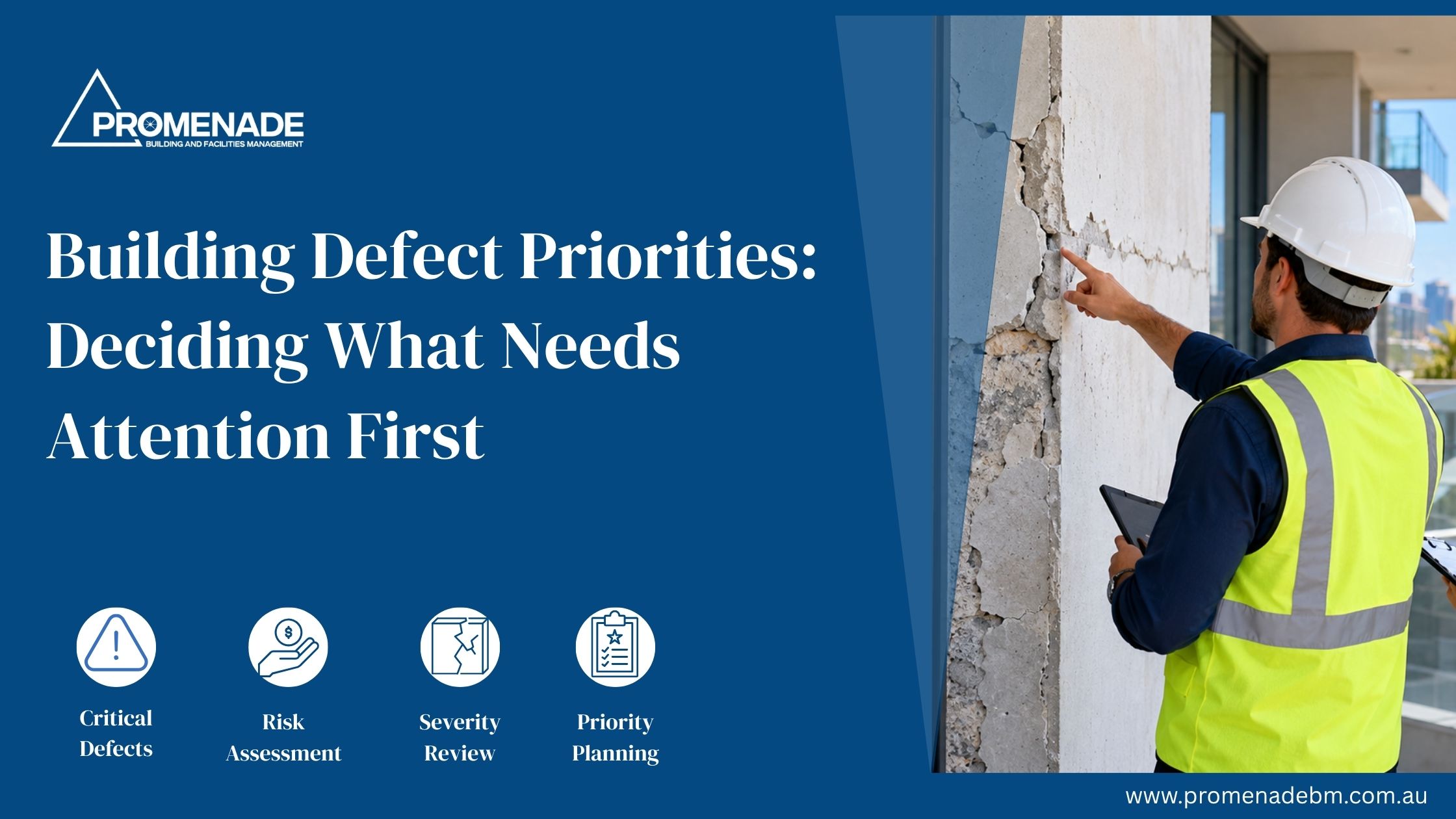
Hairline cracks in plaster are often cosmetic. Cracks that run diagonally, widen over time, or appear alongside doors and windows that no longer close properly may indicate movement in the structure. A professional assessment can determine the cause and the appropriate response.
Water Ingress
Water entering a building can stem from roofing failures, faulty waterproofing, or plumbing issues. Left unresolved, it can lead to mould, corrosion of structural elements, and compromised finishes. Because water damage tends to spread, high-priority water ingress issues generally shouldn’t wait for a routine maintenance cycle.
Faulty Building Components
Lifts, fire systems, HVAC units, and other mechanical components can fail gradually or suddenly. Faults in these systems may affect compliance obligations as well as occupant comfort and safety, so they warrant careful assessment rather than a “wait and see” approach.
Weighing Up Likelihood, Consequences, and Cost
Effective Building Defects Management Sydney requires more than spotting a problem—it means weighing several factors together:
1. Likelihood of worsening. Will this defect get progressively worse, or is it stable?
2. Consequences of delay. What happens if nothing is done for three months? For a year?
3. Safety implications. Could this affect occupants, visitors, or contractors?
4. Compliance obligations. Does the defect relate to fire safety, structural integrity, or other regulated building elements?
5. Operational disruption. Will repairs interrupt business operations, tenancy, or access?
6. Repair cost versus deferred cost. Will delaying the repair increase the eventual cost?
Balancing these factors isn’t always straightforward. Therefore, many building owners find it valuable to involve professionals who regularly assess defects across a range of properties and can offer a comparative, experience-based perspective.
When Is a Professional Inspection Necessary?
Some defects can be reasonably assessed through routine observation. Others genuinely require specialist input. A professional inspection is generally warranted when:
- The cause of a defect isn’t obvious
- There are signs of structural movement or instability
- Water ingress is recurring or widespread
- A defect could affect compliance with building codes or safety regulations
- The building manager is uncertain about the urgency of the issue
In these situations, a qualified assessment provides clarity and a documented basis for decision-making—something that matters both for safety and for future reference if disputes arise.
Comparing Defect Priorities at a Glance
The table below illustrates how defect categories are commonly approached. These categories are indicative only; actual priority and response should always be guided by inspection findings and professional judgement.
| Defect Priority | Typical Examples | Potential Risk | Recommended Response |
| Critical | Immediate structural or serious safety concerns | Potential harm to people or major damage | Take appropriate immediate safety measures and seek urgent professional assessment |
| High | Significant water ingress or defects that may rapidly worsen | Escalating damage, disruption, or compliance concerns | Arrange prompt investigation and prioritised rectification |
| Moderate | Defects requiring repair but without an identified immediate threat | Progressive deterioration or higher future costs | Schedule assessment and repairs within a suitable timeframe |
| Low | Minor cosmetic defects with no identified safety implications | Limited immediate impact, although deterioration may occur | Monitor and schedule appropriate repairs |
Creating a Defect Register and Rectification Schedule
A defect register is one of the most practical tools in Building Defects Management Sydney. It’s simply a log that records:
- The location and description of each defect
- The date it was identified
- Its assigned priority level
- The recommended action and timeframe
- The current status (pending, scheduled, resolved)
With a defect register in place, building managers can track patterns over time—for example, recurring water ingress in the same area—rather than treating each issue in isolation. A rectification schedule then sequences repairs based on priority, resourcing, and budget, ensuring urgent work isn’t delayed behind lower-priority tasks.
Common Mistakes in Defect Prioritisation
Even experienced building managers can fall into familiar traps:
- Treating all complaints equally. A squeaky door and a cracked beam shouldn’t sit on the same priority list.
- Delaying assessment due to cost concerns. Avoiding an inspection to save money now can lead to significantly higher repair costs later.
- Relying on visual assumptions. Some serious defects aren’t visually dramatic, while some minor-looking issues can be deceptive.
- Inconsistent record-keeping. Without a defect register, it’s easy to lose track of recurring or worsening issues.
- Ignoring compliance implications. Some defects, if left unresolved, could affect a building’s compliance status, not just its appearance.
Avoiding these mistakes generally comes down to having a consistent, documented process rather than relying on ad hoc judgement calls.
How Effective Building Defects Management Sydney Practices Support Better Decisions
A structured approach to Building Defects Management Sydney gives property stakeholders more than just a repair list. It provides a transparent framework for decision-making that balances safety, compliance, cost, and long-term property value.
This is particularly valuable for strata managers, body corporate representatives, and commercial landlords, who are often accountable to multiple stakeholders. A clear, documented prioritisation process helps demonstrate that decisions were made responsibly, based on genuine risk assessment rather than guesswork.
Where Promenade BM Fits In
Coordinating defect identification, prioritisation, and rectification across a commercial property can be time-consuming, particularly for owners managing multiple buildings or competing responsibilities. This is where professional building management support can make a genuine difference.
Promenade BM works with property owners and managers to support the ongoing upkeep and management of their buildings. If you’re looking to strengthen how your property handles defect identification and prioritisation, it’s worth exploring Promenade BM’s services page to see how their building management offering could support your property.
Frequently Asked Questions
Q1. What is the first step in prioritising building defects?
The first step is identifying and documenting the defect clearly, including its location, nature, and any visible signs of risk. From there, an initial assessment helps determine whether it requires urgent attention or can be scheduled for a later date.
Q2. Which building defects require immediate attention?
Defects that pose a risk to safety—such as structural instability, falling hazards, or exposed electrical components—require immediate attention. These situations should be assessed promptly by suitably qualified professionals rather than left unaddressed.
Q3. How can building managers reduce the risk of costly defect repairs?
Maintaining a defect register, scheduling regular inspections, and addressing issues according to priority rather than convenience all help reduce long-term costs. Early identification generally prevents minor issues from escalating into major, expensive repairs.
Q4. Why is professional building defect management important in Sydney?
Sydney properties face a range of conditions, from coastal weather exposure to the complexities of strata and commercial compliance. Professional Building Defects Management Sydney support helps property owners make informed, well-documented decisions about what needs attention and when.
Making Informed Decisions About Your Building’s Defects
Prioritising building defects isn’t about reacting to whichever issue seems most visible. It’s about assessing safety risk, likelihood of escalation, and potential consequences, then making informed decisions accordingly. A structured approach to Building Defects Management Sydney—supported by a clear defect register and, where needed, professional assessment—helps property owners protect their occupants, their compliance standing, and their investment.
If you’re managing a commercial property in Sydney and want support identifying and prioritising building defects, it’s worth having a conversation with the team at Promenade BM. Visit their services page to learn more about how their building management support could help you stay on top of your property’s maintenance needs, or get in touch directly to discuss your specific requirements.