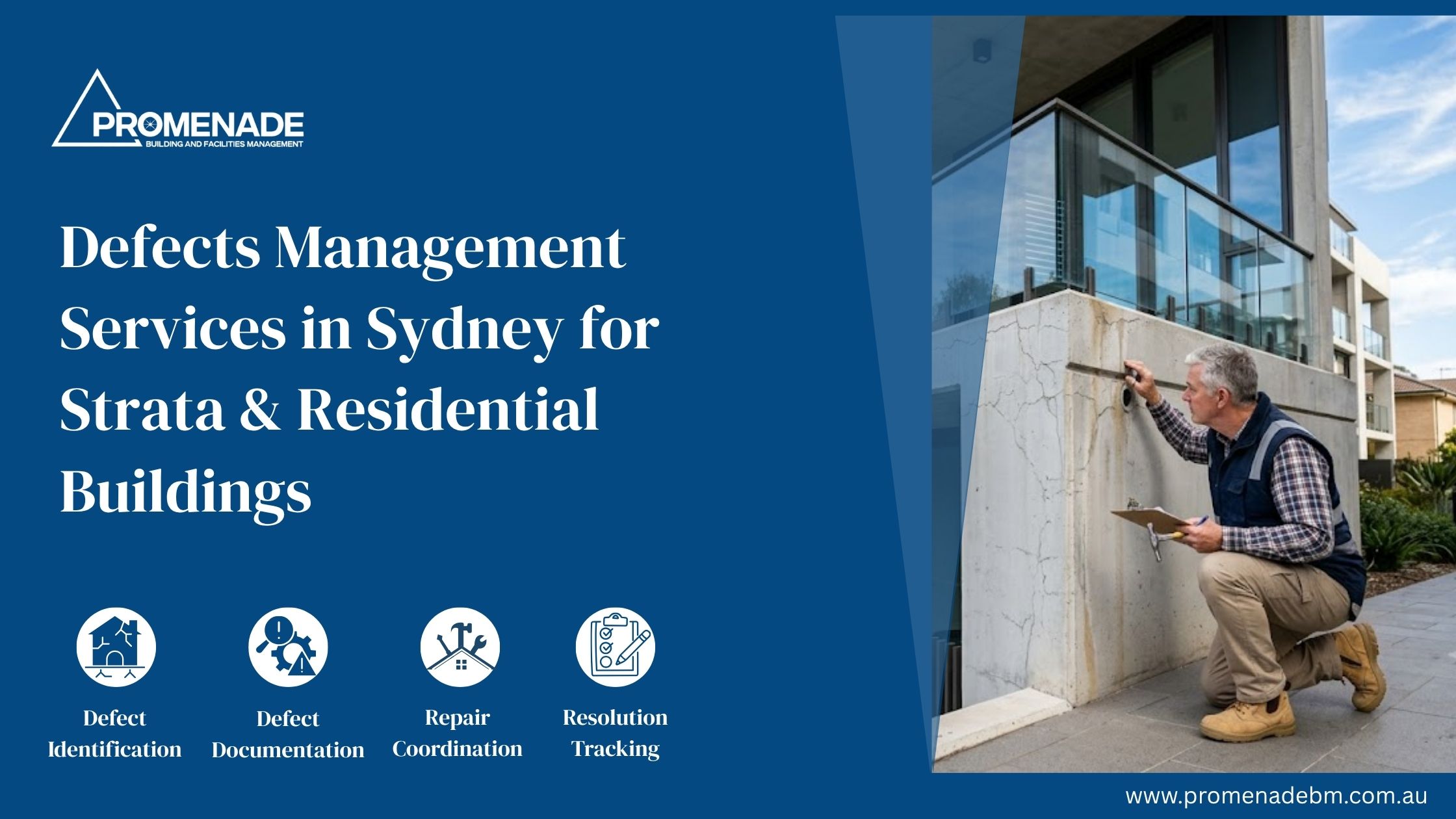
Defects management services help Sydney strata and residential property owners identify, document, prioritise, and coordinate the rectification of building defects. A structured, professionally managed approach reduces the risk of defects escalating. It supports clear stakeholder communication and helps ensure issues are properly recorded and resolved.
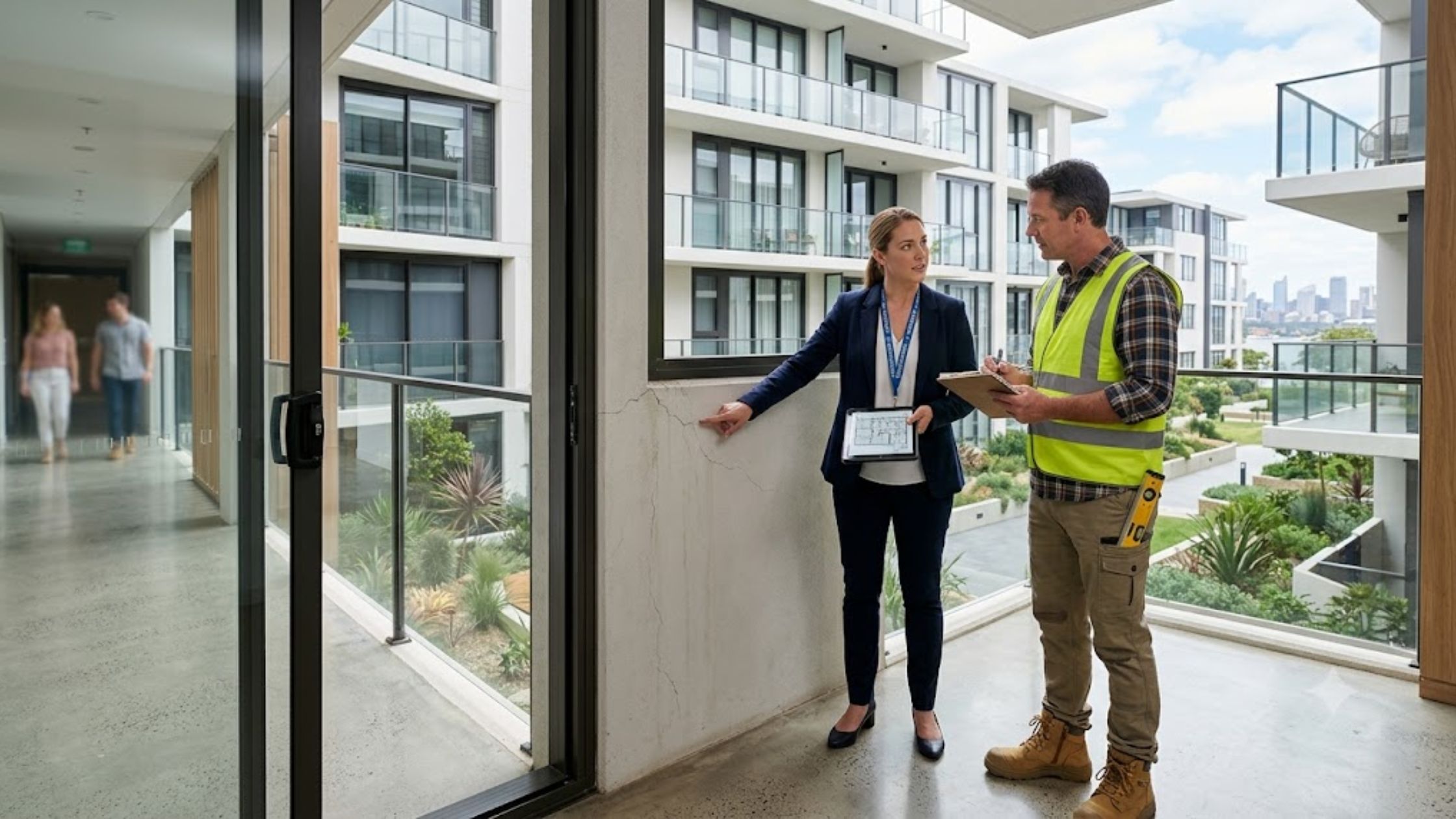
Building defects are a reality many Sydney property owners and strata stakeholders face. Some appear immediately after handover, while others emerge years into a building’s life. A hairline crack in a concrete slab, persistent water ingress through a balcony membrane, or a drainage issue that resurfaces every wet season can signal a deeper problem. Each issue deserves proper attention. Left unmanaged, a minor concern can become significantly more complex and costly to address.
For strata committees, owners corporations, strata managers, and property investors, managing defects is rarely straightforward. The process involves identifying the problem, determining accountability, coordinating with builders or contractors, communicating with residents, and following up until the issue is genuinely resolved. Without a structured approach, defects can fall through the cracks—sometimes literally.
That’s where professional Defects Management Services in Sydney play an important role. Rather than leaving strata committees to chase builders or property owners to navigate the process alone, a professional service provides the organisation, documentation, and coordination that effective defect resolution requires.
This guide explains what defects management involves, why it matters for Sydney strata and residential buildings, and how professional support can make the process more manageable for everyone involved.
What Are Defects Management Services?
Defects management services refer to the organised process of identifying, recording, prioritising, coordinating, and following up on building defects to ensure proper assessment and rectification. This differs from routine property maintenance, which addresses general wear and tear or scheduled upkeep tasks.
Building defect management focuses specifically on faults, failures, or substandard workmanship that may exist in a property, particularly in newly constructed or recently completed buildings. These defects may relate to structural elements, waterproofing, finishes, plumbing, roofing, facades, or a range of other building components.
A professional defects management service acts as the central coordination point between residents, builders, contractors, strata managers, and owners corporations. The goal is to ensure that professionals capture defects accurately, communicate them clearly, and follow them through to resolution without unnecessary delays or disputes.
Why Building Defects Should Not Be Ignored
Unresolved building defects rarely stay the same. They tend to deteriorate. A waterproofing failure that allows minor moisture ingress during light rain can become significant structural damage after prolonged exposure. A cracked render that appears cosmetic may hide movement or moisture pathways behind the surface.
When owners do not document and manage defects properly, several challenges can emerge. Repair complexity often increases over time as secondary damage compounds the original issue. Residents and occupants may experience ongoing disruption, particularly when defects affect common areas, shared services, or individual lots. Coordination between contractors and stakeholders also becomes harder when records remain incomplete or when responsibility is disputed.
Disputes between owners, builders, and other parties are also more likely when defects lack clear documentation from the outset. Clear, well-maintained records of defect identification, reporting, and follow-up can support more efficient resolution. They can also help avoid protracted disagreements. Engaging professional defect management support early can make a meaningful difference to how smoothly the process unfolds.
Common Building Defects Found in Sydney Strata & Residential Properties
Sydney’s building stock spans everything from high-rise apartment towers to boutique strata complexes and standalone residential properties. Regardless of building type or age, certain defects appear with regularity across properties.
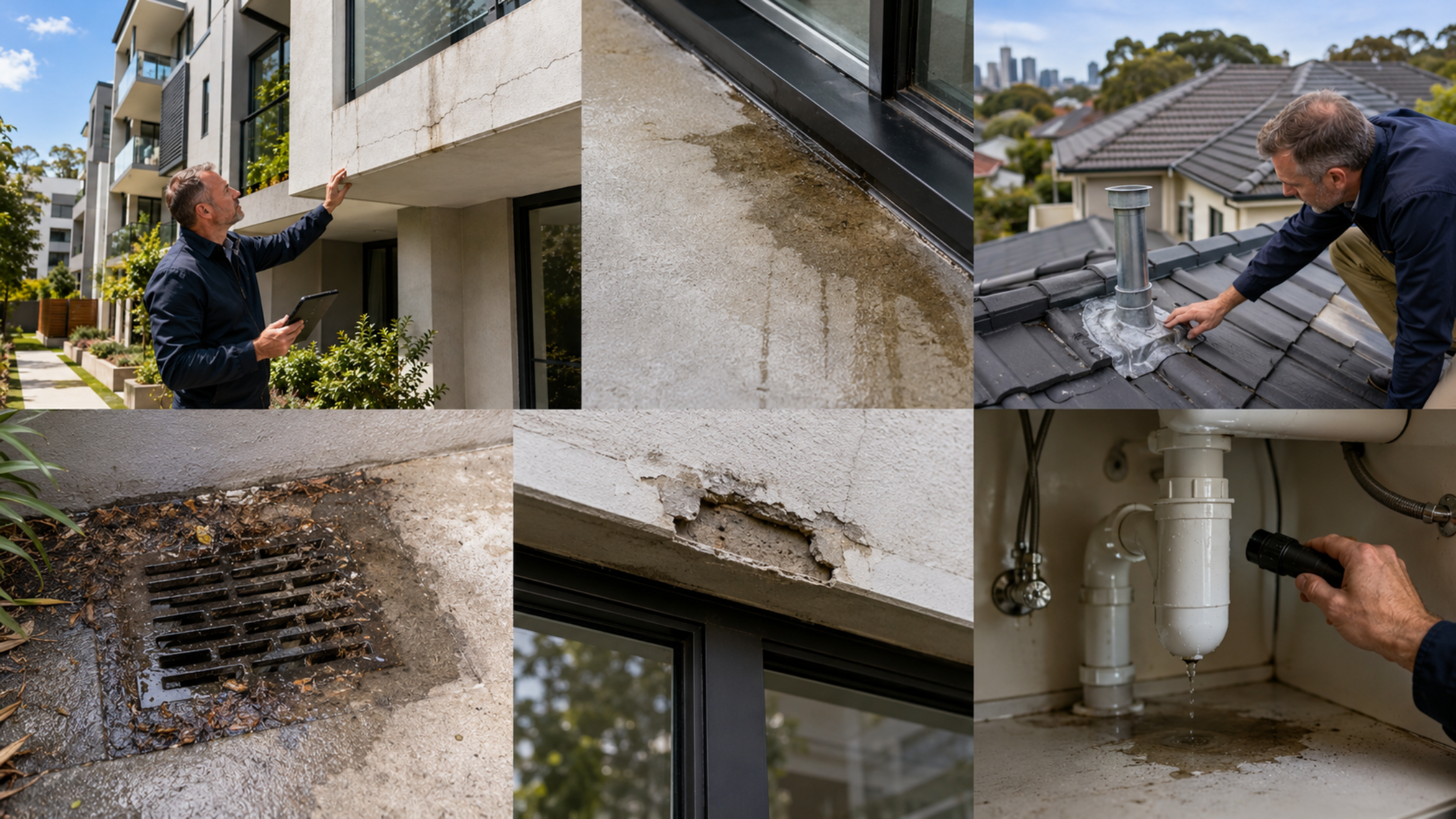
Water ingress and waterproofing failures are among the most commonly reported issues in Sydney strata and residential buildings. These issues can affect basements, balconies, rooftops, bathrooms, and external walls. Given Sydney’s rainfall patterns, waterproofing performance remains a critical concern in both new and ageing buildings.
Concrete deterioration and cracking can occur in structural elements, car park slabs, and external surfaces. Some cracking is superficial, while other forms indicate more serious structural movement or shrinkage that warrants further assessment.

Roofing defects, including inadequate flashing, poor sealing, or membrane failures, can lead to leaks that affect multiple levels of a building. Drainage problems can also compound water management issues. These problems may involve blocked, incorrectly graded, or inadequately designed drainage systems.
Façade and cladding defects, balcony defects, and plumbing-related issues such as pipe leaks or inadequate hot water services are also frequently reported in apartment buildings. Finishing defects include inconsistent tiling, poor paint application, and substandard joinery. These issues may seem minor but can reflect broader quality concerns in a building’s construction.
It is important to note that not every visible issue has the same cause or severity. Professional building defect assessment helps distinguish between cosmetic concerns and defects that require prompt attention. This ensures that resources and priorities remain appropriately directed.
How Defects Management Services in Sydney Can Help
A professional defects management service brings structure to what can otherwise become a disorganised and frustrating process. The practical benefits extend across every stage of defect resolution.
At the identification stage, an experienced professional can help ensure that the team captures defects thoroughly. This includes obvious issues and those that may otherwise go unnoticed until they become more serious. Accurate documentation forms the foundation for everything that follows. Without clear records, it becomes difficult to demonstrate when someone first reported a defect, what they communicated, and what action followed.
Professional services also support prioritisation. Not all defects carry the same urgency or consequence. Some require immediate attention due to safety or habitability concerns. Others can wait for a reasonable timeframe. Experienced professionals help owners corporations and strata committees understand which issues to address first and why.
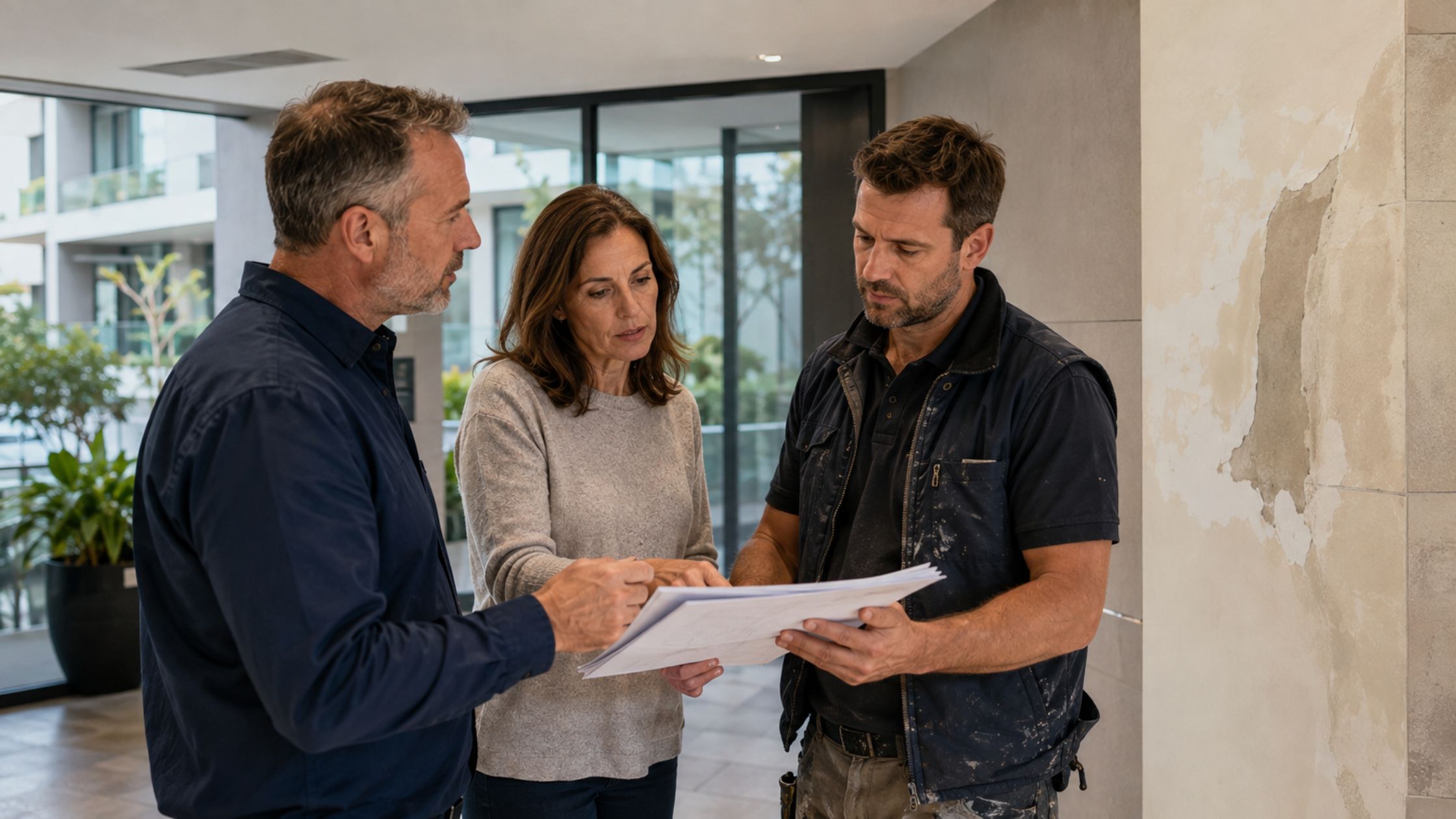
Coordinating contractors, builders, and specialist consultants is another area where professional support adds clear value. Managing access arrangements with residents, scheduling inspections and rectification works, and following up when timelines slip are all time-consuming tasks. A dedicated defects management service carries this administrative and coordination burden. This allows strata managers and committee members to focus on other responsibilities.
Clear communication with stakeholders—residents, lot owners, the owners corporation, and relevant contractors—is also central to the service. Keeping all parties informed throughout the process reduces frustration, builds confidence, and supports a more collaborative approach to resolution.
How Does the Defects Management Process Generally Work?
While specific processes vary depending on the property, building type, defect scope, and professional requirements, a typical defects management process follows a logical sequence.
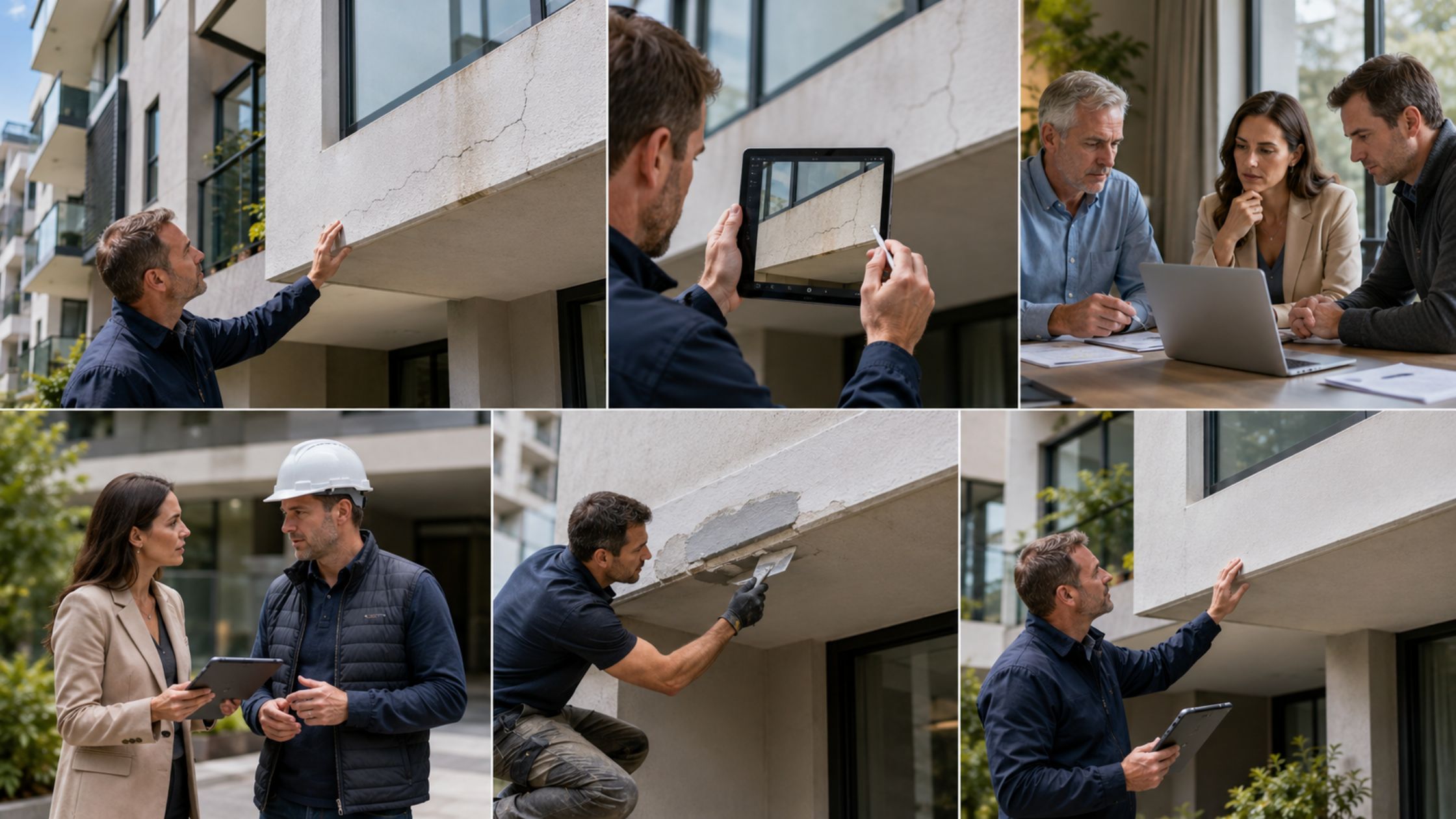
The process generally begins with an initial consultation. During this stage, the team discusses the scope of services, property requirements, and existing defect concerns. This step is followed by a property or site assessment. The professional then conducts a thorough review of the building to identify defects across relevant areas.
Once the team identifies defects, it documents and reports them in a structured format. The report records the nature of each issue, its location, photographic evidence where applicable, and any relevant notes. The team then prioritises the defects to ensure that issues receive attention according to their urgency and impact.
The team then coordinates with relevant builders, contractors, or specialist consultants. This includes managing access, booking inspections, and maintaining records of all communications. Rectification monitoring ensures that agreed works meet an appropriate standard. Follow-up and close-out then confirm that each defect has been genuinely resolved before the team closes the case.
This structured, documented approach distinguishes professional defects management from informal or reactive defect handling.
Why Strata Buildings Need a Structured Approach to Defect Management
Strata buildings present a particular set of challenges when it comes to defect management. Multiple lot owners, common property areas, owners corporations, strata managers, resident committees, and various contractors form part of a complex stakeholder environment. A defect in a common area may affect multiple residents. Accountability for its resolution may involve the builder, the strata manager, or the owners corporation—sometimes all three.
Without a clearly defined process, strata defect management can quickly become fragmented. Residents may report defects through different channels, follow-up can become inconsistent, and accountability may remain unclear. Strata committees, many of whom are volunteers, may find themselves managing a growing backlog of unresolved issues alongside their other responsibilities.
A structured defects management approach provides the framework that strata buildings need. It creates a single point of contact, ensures consistent documentation, and establishes accountability at each stage of the process. For owners corporations and strata committees dealing with newly built apartments or buildings still within a defect liability period, this structure is particularly valuable.
Defects Management for Residential Buildings
Defects management is not limited to large strata complexes. Individual residential properties and smaller multi-unit developments can also benefit significantly from professional support. This is particularly true when defects are numerous, complex, or require coordination with a builder or developer.
For property investors and residential owners dealing with post-construction defects, an experienced professional can manage the identification, documentation, and follow-up process. This can reduce the time and stress involved in achieving resolution. Thorough defect reporting also creates a clear record that supports transparent communication with all relevant parties.
When Should You Engage a Defects Management Professional?
There are several situations where engaging professional defects management support is worth considering. Newly completed buildings transitioning from construction to occupation often benefit from early defect identification. This can help address minor issues before they become established problems.
Strata committees and owners corporations managing a significant volume of reported defects may also benefit from professional support. This is particularly true when follow-up with builders becomes difficult to coordinate. Properties approaching the end of a relevant warranty or liability period may also benefit from a professional defect assessment. This can help ensure that owners properly capture and communicate outstanding issues in a timely manner.
When internal resources are stretched, communication with builders has stalled, or documentation remains inconsistent, these are practical indicators that professional support could make a meaningful difference.
Choosing the Right Defects Management Company in Sydney
Selecting the right defects management company requires careful consideration. Relevant experience with strata and residential buildings in Sydney is an important starting point. A provider familiar with the complexities of strata property—common property, owners corporation obligations, and multi-stakeholder communication—will be better equipped to navigate the process effectively.
Clear and structured reporting is essential. Look for a service that maintains thorough documentation and provides transparent records of all defects, communications, and outcomes. Equally important is the provider’s approach to coordination. Consider how they manage relationships with builders and contractors, how they handle access arrangements with residents, and how consistently they follow up on outstanding items.
Professional communication is another key consideration. Strata committees and property owners need confidence that their defects management provider will keep all relevant parties informed throughout the process. A transparent scope of services, with clearly defined responsibilities, helps avoid misunderstandings and sets realistic expectations from the outset.
Why Consider Promenade BM for Defects Management?
Promenade BM has been delivering building and property management services across Sydney since 2019. The company maintains a commitment to transparency, quality, and long-term value. Their Defects Management Services in Sydney are designed to simplify the defect resolution process for strata and residential properties. They act as the primary contact for all parties involved.
When a defect is reported, Promenade BM reviews and lodges it with the relevant builder through their management portal. The team maintains consistent follow-up, coordinates access and bookings with residents and builders, and confirms completion before closing the case. Their approach remains structured, documented, and focused on achieving resolution without unnecessary delays or conflict.
For strata committees, owners corporations, and property owners in Sydney who want a professional and organised approach to managing building defects, Promenade BM’s team is available to discuss your property’s specific requirements. You can learn more about their building and property management services and reach out to the team directly.
Frequently Asked Questions
Q1. What are defects management services?
Defects management services involve the identification, documentation, prioritisation, coordination, and follow-up of building defects to ensure proper assessment and resolution. Professional defects management services act as a central point of contact between property owners, residents, builders, and contractors. This helps streamline the entire process.
Q2. What types of building defects can be managed?
A wide range of defects can be managed, including waterproofing failures, water ingress, concrete cracking and deterioration, roofing issues, drainage problems, façade and balcony defects, plumbing-related concerns, and finishing defects. The appropriate management approach will depend on the nature, severity, and location of each defect.
Q3. Why do strata properties need a structured approach to defect management?
Strata properties involve multiple stakeholders—lot owners, owners corporations, strata managers, and contractors—across shared and individual areas. Without a structured process, defect reporting becomes inconsistent, accountability remains unclear, and follow-up becomes difficult to coordinate. A professional, documented approach ensures that teams manage defects systematically and keep all relevant parties informed.
Q4. When should a property owner or strata committee engage a defects management professional?
Professional support is worth considering when a building is newly completed, when a significant volume of defects requires coordination, when follow-up with builders becomes difficult to manage, or when existing documentation remains inconsistent. Engaging professional support early generally makes the process more manageable and helps prevent defects from becoming more complex over time.
Discuss Your Building’s Defect Management Requirements with Promenade BM
Building defects can be stressful to navigate—especially when multiple stakeholders are involved and the process lacks clear structure. Whether you are part of a strata committee managing post-construction defects, an owners corporation coordinating rectification works, or a residential property owner dealing with unresolved building issues, professional guidance can make a significant difference.
Promenade BM works with strata properties, residential buildings, and property stakeholders across Sydney to provide structured, professionally managed defect resolution. Their team can help you understand the scope of your building’s defects, establish a clear documentation process, and coordinate with relevant parties to achieve resolution.
To discuss your building’s requirements, explore Promenade BM’s professional defects management services or contact their team directly at admin@promenadebm.com.au or 1300 609 979. Getting the right support in place early can help your property avoid unnecessary complications and ensure that teams manage defects with the structure and care they deserve.