Quick answer: A property typically needs a facilities management company when maintenance issues repeat, repairs become reactive, tenant complaints rise, contractor coordination becomes overwhelming, compliance tasks are missed, upkeep consumes too much time, or there’s no long-term maintenance strategy. Recognizing these signs early helps property owners protect asset value and avoid costly disruptions.
Owning or managing a commercial property in Sydney involves far more than collecting rent and responding to the occasional repair request. Behind every functioning building sits a web of maintenance schedules, contractor relationships, safety obligations, and tenant expectations that need constant attention. When these responsibilities pile up faster than they can be handled internally, small problems tend to snowball into expensive, disruptive ones.
Many property owners and managers only realize they need outside support after things have already gone wrong — a burst pipe that could have been prevented, a compliance deadline that slipped through the cracks, or a tenant who’s finally had enough of unresolved complaints. The good news is that these situations are usually preceded by warning signs that are easy to spot once you know what to look for.
This article walks through seven of the clearest signs that a property could benefit from a facilities management company, explains why each issue tends to develop, and outlines how professional support addresses it before it becomes a bigger problem.
What Is Professional Facilities Management?
Professional facilities management is the coordinated oversight of a commercial property’s day-to-day operational needs. Rather than reacting to individual issues as they arise, a facilities management company takes a structured approach to keeping a building running smoothly.
This typically covers:
- Building maintenance and repairs
- Cleaning and general upkeep
- Safety and compliance-related processes
- Preventive maintenance planning
- Day-to-day property operations
- Ongoing facility requirements
For commercial property owners, this means one point of contact manages the moving parts that would otherwise fall on an internal team — or worse, on no one at all. Rather than diving into technical jargon, think of it as having a dedicated operator who keeps the building functioning while owners and managers focus on higher-level decisions.
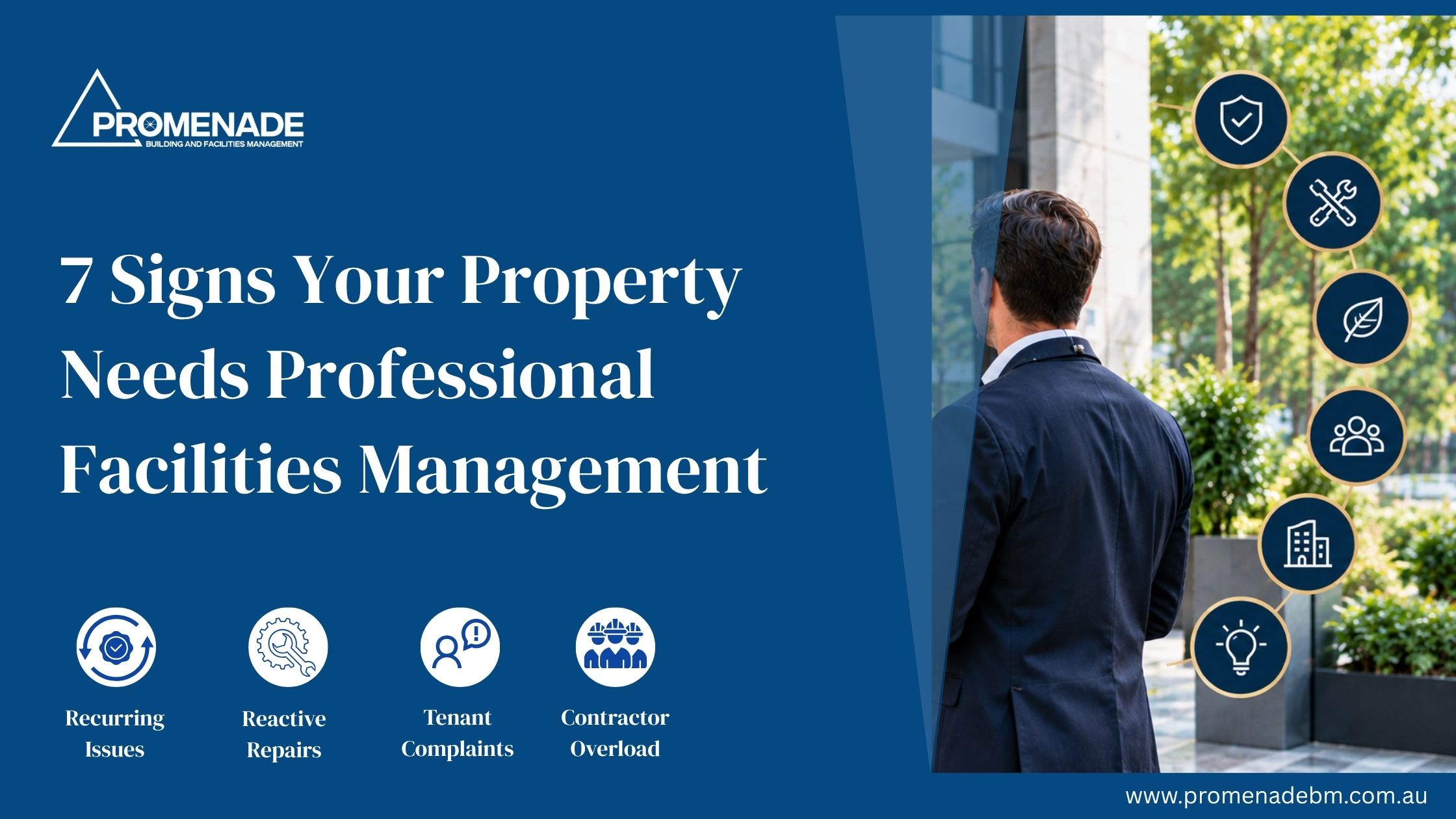
7 Signs Your Property Needs Professional Facilities Management
Maintenance Issues Keep Repeating
If the same fault list keeps showing up month after month, that’s rarely a coincidence. Recurring maintenance issues — a leak that keeps returning, an HVAC unit that fails repeatedly, a lift that needs constant call-outs — usually point to underlying causes that haven’t been properly diagnosed or resolved.
Without a structured facilities management approach, these issues often get patched rather than fixed. A facilities management company identifies the root cause of recurring faults and coordinates a proper resolution, rather than repeatedly treating the symptoms.
Repairs Are Becoming Reactive Instead of Preventive
There’s a meaningful difference between fixing something because it’s scheduled for maintenance and fixing something because it’s already broken. When most of a property’s repair work falls into the second category, maintenance has shifted from planned to reactive.
Reactive repairs tend to cost more, cause more disruption, and carry a higher risk of safety incidents. Professional facilities management flips this dynamic by introducing preventive maintenance schedules — inspections and servicing that catch problems before they escalate into emergencies.
Tenant or Occupant Complaints Are Increasing
An uptick in tenant complaints is one of the most direct signals that something in the building’s operations isn’t working. Complaints about slow repair response times, unclean common areas, or unresolved maintenance requests tend to compound — dissatisfied tenants are more likely to escalate issues, withhold rent, or eventually leave.
A facilities management company centralizes communication and issue tracking, meaning complaints get logged, actioned, and resolved faster. This kind of responsiveness has a direct impact on tenant satisfaction and retention.
Your Team Struggles to Manage Multiple Contractors
Commercial properties often rely on a range of contractors — electricians, plumbers, cleaners, landscapers, and specialist technicians. Managing all of these relationships, schedules, and invoices internally can quickly become overwhelming, particularly for teams without dedicated facilities staff.
When contractor management starts eating into time that should be spent on higher-value tasks, it’s a sign that centralized coordination is needed. Professional facilities management consolidates contractor relationships under one point of contact, streamlining scheduling, quality control, and accountability.
Safety, Inspection, or Compliance Tasks Are Being Missed
Missed inspections and overlooked compliance tasks create real operational risk. Whether it’s fire safety checks, essential services testing, or general building safety requirements, these tasks are easy to lose track of when there’s no dedicated system for monitoring them.
A facilities management company implements scheduled monitoring and follow-up processes, helping ensure these tasks aren’t overlooked. This proactive oversight reduces both operational and compliance-related risk for the property owner.
Property Maintenance Is Taking Too Much Time and Resources
If maintaining the property is consuming a disproportionate amount of time, energy, or budget relative to its size, that’s worth examining. This is especially common for owners or managers juggling multiple responsibilities, where facilities issues become a constant drain rather than a manageable task.
Bringing in professional facilities management services frees up internal resources, allowing property owners and managers to redirect their attention toward strategic priorities instead of day-to-day firefighting.
You Lack a Consistent Long-Term Facilities Management Strategy
Ad hoc maintenance decisions — fixing things as they break, without a broader maintenance plan — tend to be less efficient and more expensive over time. If a property has never had a documented maintenance strategy, it’s likely operating reactively by default.
A facilities management company brings structure through long-term planning: scheduled preventive maintenance, contractor management systems, and clear reporting. This consistency supports better budgeting and protects the long-term condition of the property.
Property Challenges at a Glance
| Property Challenge | Possible Impact | How Professional Facilities Management Can Help |
| Repeated maintenance problems | Higher disruption and costs | Preventive maintenance planning |
| Increasing tenant complaints | Reduced satisfaction | Faster issue coordination |
| Multiple contractors | Time-consuming management | Centralized contractor coordination |
| Missed inspections | Operational and compliance risks | Scheduled monitoring and follow-ups |
| Reactive repairs | Unexpected disruption | Planned maintenance approach |
Why Professional Facilities Management Matters for Sydney Properties
Commercial properties across Sydney — office buildings, retail sites, and mixed-use developments — face a common set of operational pressures. Aging building stock, dense contractor markets, and tenant expectations around building presentation all contribute to the maintenance workload property owners and managers carry.
For Sydney property owners, structured facilities management supports several practical outcomes:
- Maintaining professional property standards across common areas, building systems, and shared amenities
- Reducing operational disruptions by catching issues before they affect tenants or occupants
- Coordinating maintenance efficiently across multiple trades and service providers
- Supporting tenant satisfaction through faster response times and clearer communication
- Managing multiple property requirements under one coordinated system rather than piecemeal arrangements
- Taking a proactive approach to maintenance, rather than constantly reacting to the latest issue
A facilities management company operating locally understands the practical realities of managing Sydney commercial properties — from coordinating trades across the city to keeping buildings compliant and presentable year-round.
When Should You Consider Hiring a Facilities Management Company?
Not every property needs external facilities management support immediately, but there are clear indicators that it’s worth exploring. Businesses and property owners typically benefit from professional support when:
- Property maintenance becomes difficult to coordinate internally
- Internal teams are overloaded with day-to-day operational tasks
- Maintenance has become mostly reactive rather than planned
- Multiple contractors need to be managed simultaneously
- Tenant or occupant issues are increasing in frequency
- Preventive maintenance isn’t happening consistently
- There’s a desire for a more structured, long-term approach to property upkeep
If several of these apply to your property, it’s a strong indication that bringing in dedicated facilities management support could resolve the underlying operational strain.
Considering Professional Support? Promenade BM Can Help
Property owners and managers who recognize one or more of these seven signs don’t need to navigate the solution alone. Promenade BM provides facilities management services for commercial properties across Sydney, helping coordinate building maintenance, contractor management, and day-to-day operational needs.
Rather than treating facilities management as a reactive fix, Promenade BM works with property owners and managers to establish a more structured, proactive approach — one that reduces disruption, supports tenant satisfaction, and helps protect the long-term value of the property. Property owners exploring their options can view Promenade BM’s full range of services to understand how professional support could apply to their specific building.
For property owners, managers, and strata professionals across Sydney, having a reliable local partner for facilities management can make a measurable difference in how smoothly a property runs day to day. Promenade BM has been delivering building and facilities management services across Sydney since 2019, working with commercial properties, strata buildings, and owners corporations to keep operations running efficiently and reduce the burden on internal teams.
Frequently Asked Questions
Q1. What does a facilities management company do?
A facilities management company coordinates the operational needs of a commercial property, including maintenance, repairs, cleaning, safety and compliance processes, and contractor management. The goal is to keep the building running smoothly while reducing the day-to-day burden on property owners and managers.
Q2. When should a commercial property hire a facilities management company?
A commercial property should consider hiring a facilities management company when maintenance issues keep repeating, repairs become mostly reactive, tenant complaints increase, contractor coordination becomes difficult, or there’s no consistent long-term maintenance strategy in place.
Q3. How can professional facilities management help commercial properties?
Professional facilities management helps commercial properties by centralizing maintenance coordination, introducing preventive maintenance schedules, managing contractor relationships, and ensuring safety and compliance tasks aren’t overlooked. This reduces disruption and supports better long-term property outcomes.
Q4. Why is preventive maintenance important for commercial buildings?
Preventive maintenance is important because it addresses potential issues before they become costly, disruptive problems. Rather than reacting to breakdowns and emergencies, preventive maintenance helps commercial buildings run more predictably and can reduce long-term repair costs.
Recognizing the Signs Early Makes All the Difference
Repeated maintenance issues, reactive repairs, rising tenant complaints, contractor overload, missed compliance tasks, resource strain, and a lack of long-term strategy are all signs that a property could benefit from professional support. Individually, these signs might seem manageable. Together, they often point to a property that’s operating reactively rather than strategically.
Recognizing these signs early gives property owners and managers the opportunity to move toward a more structured, proactive approach before small issues become expensive problems. A facilities management company can provide the coordination, oversight, and planning needed to keep a commercial property running efficiently.
If any of these signs sound familiar, it may be worth discussing your property’s specific needs with a professional team. Visit Promenade BM’s services page to explore how facilities management support could work for your building, or get in touch with the team directly to talk through your property’s requirements.