Quick answer: Commercial Facilities Management Sydney helps property owners and managers respond to changing tenant expectations by improving maintenance response times, common-area presentation, building comfort, communication, and sustainability. Sydney tenants increasingly judge buildings on day-to-day experience, not just location, making proactive facilities management a practical way to stay competitive.
Commercial tenants in Sydney no longer judge a building purely on its address or floor plan. They notice how quickly a maintenance request gets resolved, how clean the lobby looks on a Monday morning, and whether building management actually responds when something goes wrong. These small, everyday details shape how tenants feel about the space they occupy, and increasingly, they influence leasing decisions too.
For property owners, asset managers, and strata committees, this shift means rethinking how a building is run day to day. A well-located property with outdated systems or inconsistent service can still lose tenants to a building that simply feels better managed. This is where Commercial Facilities Management Sydney becomes a practical part of the conversation, not just a line item in an operating budget.
This article looks at how tenant expectations are changing across Sydney’s commercial buildings, why this matters to property performance, and what owners and managers can do to prepare. It also outlines a practical framework for improvement and explains where professional facilities management fits into the picture.
How Tenant Expectations Are Changing in Sydney Commercial Buildings
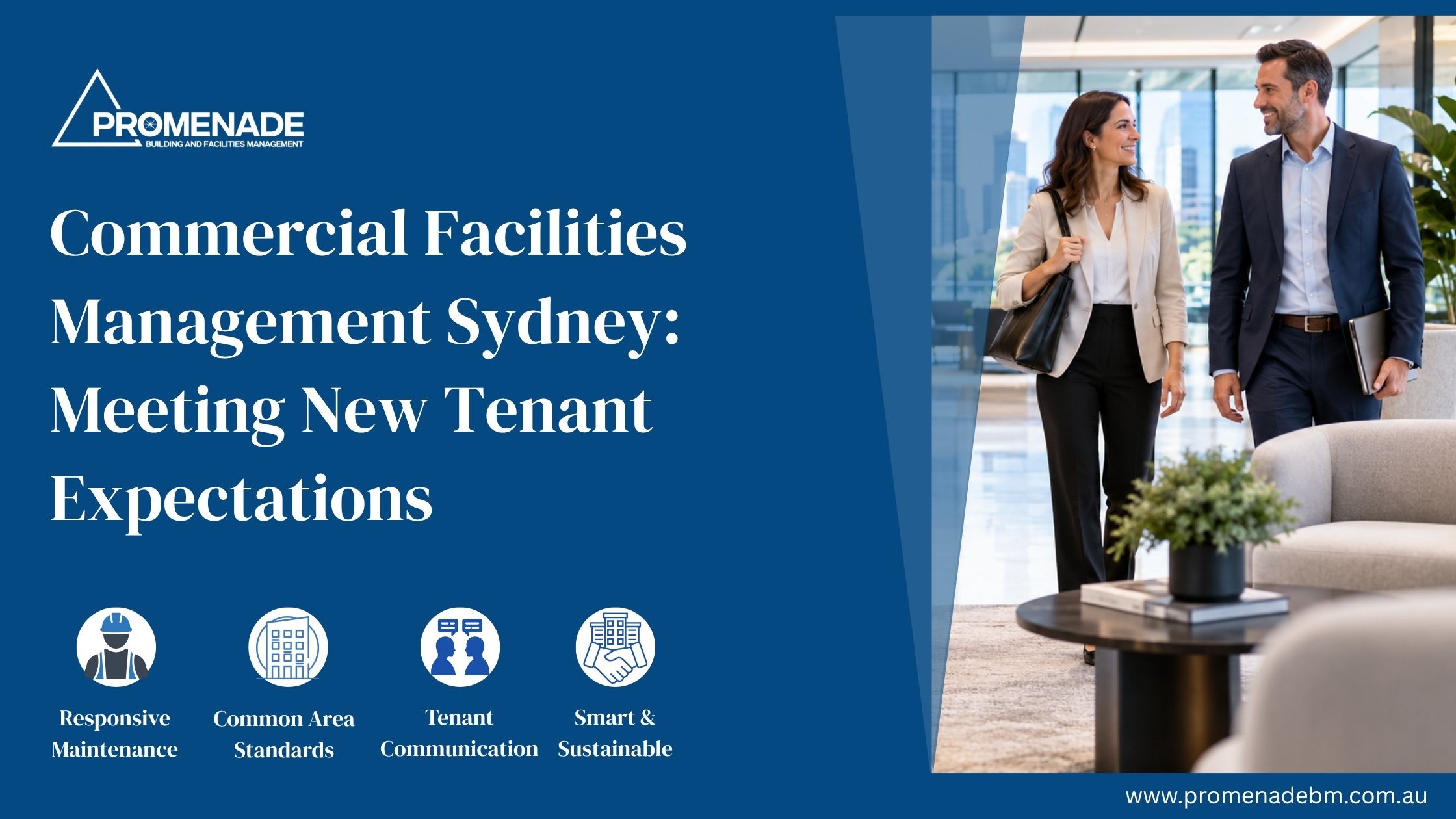
Commercial tenants today expect buildings to work for them, not just house them. A functional workspace is no longer enough on its own. Tenants want comfortable, well-maintained environments where issues are resolved quickly and communication feels straightforward.
Several factors are shaping this shift:
- Comfortable and functional workspaces. Tenants want reliable heating, cooling, and lighting that supports productivity rather than distracting from it.
- Fast maintenance response. A slow response to a leaking tap or malfunctioning lift reflects poorly on the entire building, not just the specific issue.
- Clean and well-maintained common areas. Lobbies, corridors, and shared facilities are often a tenant’s first and last impression of a building each day.
- Reliable building systems. Consistent performance from essential services builds trust in the property overall.
- Convenient communication. Tenants want a clear way to report issues and get updates without chasing multiple contacts.
- Better technology. Digital reporting tools and building monitoring are becoming more common, even in mid-sized commercial properties.
- Sustainability. Energy use and waste management are increasingly part of how tenants assess a building’s long-term suitability.
- Safety and security. Clear protocols and well-maintained safety systems remain a baseline expectation.
- Flexible workplace requirements. As working patterns change, tenants value buildings that can adapt to different occupancy needs.
Together, these expectations point to one conclusion: Sydney commercial buildings are being evaluated on day-to-day performance, not just physical attributes. This is precisely the gap that effective Commercial Facilities Management Sydney services are designed to close.
Why Tenant Experience Matters to Commercial Property Performance
Tenant experience and building management are closely linked. When maintenance is proactive and communication is clear, tenants are more likely to view the property favourably. When issues go unresolved or communication breaks down, even a well-located building can develop a reputation problem.
Well-managed facilities can contribute to several practical outcomes for property owners and managers:
- A more positive building reputation among current and prospective tenants
- Stronger tenant retention, as fewer avoidable frustrations build up over time
- A better overall workplace experience for occupants and their staff
- Fewer repeated complaints about the same recurring issues
- More efficient day-to-day operations across the property
- A stronger perceived value of the property among tenants and visitors
It’s worth noting that none of this guarantees specific financial results. But consistent, professional management does tend to reduce friction, and friction is often what drives tenant dissatisfaction. This is one reason Commercial Facilities Management Sydney has become a more visible part of property strategy, rather than something handled reactively.
Key Areas Sydney Commercial Buildings Should Improve
Responsive Maintenance
Tenants generally expect maintenance issues to be identified and addressed before they escalate into bigger problems. A dripping pipe ignored for weeks can become a far more disruptive repair, and tenants notice when small issues are left unresolved.
Preventive maintenance plays a central role here. Routine inspections help catch problems early, while clear reporting channels make it easy for tenants to flag issues as they arise. Timely resolution matters just as much as the initial response, and tracking recurring problems helps identify patterns before they become ongoing frustrations. This proactive approach is a core function of Commercial Facilities Management Sydney, where the goal is to prevent disruption rather than simply respond to it after the fact.
Clean, Safe and Well-Presented Common Areas
Entrances, lobbies, lifts, corridors, and shared facilities all contribute to how tenants and visitors perceive a building. The key factor isn’t just how often these areas are cleaned, but how consistently they’re maintained to a high standard.
A lobby that looks immaculate one week and neglected the next sends a mixed message about how seriously a building is managed. Consistency builds trust, and trust is what keeps tenants comfortable in a space long term.
Building Comfort and Reliable Services
Dependable building systems form the backbone of a comfortable commercial environment. HVAC performance, lighting quality, plumbing reliability, and electrical systems all affect how tenants experience their workspace day to day.
Shared facilities also matter here. A well-functioning common kitchen or amenity area can meaningfully improve tenant satisfaction, while a poorly maintained one can quickly generate complaints. Building comfort isn’t a single fix; it’s an ongoing commitment to keeping core systems running reliably.
Better Communication With Tenants
Communication has become a defining part of how tenants judge building management. Clear updates on maintenance progress, prompt notifications about planned works, and straightforward response processes all help tenants feel that their concerns are being taken seriously.
A clear escalation process matters too. When tenants know exactly who to contact and what to expect, frustration tends to decrease, even if an issue takes time to resolve. Feedback channels further reinforce this by giving tenants a way to flag concerns before they become larger problems. In many ways, communication is where Commercial Facilities Management Sydney either builds tenant confidence or erodes it.
Technology and Smart Building Expectations
Technology is gradually reshaping how tenants interact with commercial buildings. Digital maintenance reporting allows tenants to log issues quickly, while building monitoring systems help managers identify problems before tenants even notice them.
Energy monitoring and data-supported maintenance planning are becoming more common tools for identifying inefficiencies. That said, not every commercial building needs expensive smart-building infrastructure to meet tenant expectations. Even simple digital tools, used consistently, can meaningfully improve how a building is managed and perceived.
Sustainability and Energy Efficiency
Sustainability is increasingly factoring into how tenants assess a commercial property, particularly among businesses with their own environmental commitments. Practical measures such as efficient lighting, building system optimisation, waste reduction, and responsible resource use all contribute to a more sustainable operation.
Monitoring energy consumption over time can also help identify where efficiency gains are possible. These steps don’t need to be dramatic to matter. Incremental, well-managed improvements often make a bigger practical difference than one-off initiatives.
A Practical Framework for Preparing Commercial Buildings for Changing Tenant Expectations
Responding to changing tenant expectations works best as a structured process rather than a series of ad hoc fixes.
The first step is understanding tenant needs. Gathering feedback through surveys, direct conversations, or recurring maintenance requests helps identify where the biggest gaps exist. From there, it’s worth assessing current building performance across maintenance, cleanliness, comfort, communication, and core building systems to establish a clear baseline.
Once this picture is clear, the focus should shift to prioritising high-impact improvements. Not every issue needs to be addressed at once, and focusing on the areas that most directly affect tenant experience tends to produce the most noticeable results. Introducing preventive maintenance is often one of the highest-value changes a building can make, shifting the approach from reactive repairs to planned, scheduled upkeep.
Improving communication should run alongside these operational changes. Clearer processes for reporting and resolving issues make tenants feel heard, even when a resolution takes time. Finally, performance should be reviewed regularly. Inspections, tenant feedback, maintenance records, and operational data all provide useful signals for where further improvement is needed.
This kind of structured, ongoing approach is exactly what Commercial Facilities Management Sydney is designed to support, particularly for owners managing multiple priorities across a property portfolio.
Tenant Expectations vs Building Management Priorities
| Tenant Expectation | Building Management Response | Potential Benefit |
| Fast maintenance response | Clear maintenance procedures and tracking | Better tenant experience |
| Clean common areas | Consistent inspection and cleaning standards | More professional environment |
| Comfortable workspace | Regular review of building systems | Improved occupant comfort |
| Better communication | Timely updates and clear contact channels | Greater transparency |
| Energy efficiency | Monitoring and operational improvements | More efficient building operation |
| Reliable facilities | Preventive maintenance | Fewer avoidable disruptions |
| Modern workplace experience | Appropriate technology and building improvements | Better usability |
The Role of Professional Commercial Facilities Management in Sydney
Professional facilities management gives property owners a structured way to respond to the expectations outlined above, rather than addressing issues one at a time as they arise. This typically includes preventive maintenance scheduling, regular building inspections, coordination of repairs, and ongoing oversight of common areas.
Tenant communication also tends to be more consistent when it’s handled through an organised facilities management process, since there’s a clear point of contact and a defined process for escalation. Service coordination across cleaning, landscaping, and maintenance contractors becomes simpler too, as does ongoing monitoring of overall building performance.
For property owners managing these responsibilities alongside their broader portfolio, professional facilities management services can provide the operational structure needed to keep a building responsive to tenant needs over time. Commercial Facilities Management Sydney, in this sense, functions less as a single service and more as an ongoing operational discipline.
How Promenade BM Can Help Sydney Commercial Buildings Adapt
Promenade BM works with Sydney property owners and managers to support the day-to-day operational needs of commercial buildings, with a focus on proactive issue resolution and clear communication across every stage of the process. The company’s approach centres on identifying potential issues early, clarifying accountability when something needs attention, and keeping stakeholders informed throughout.
For owners and managers looking to strengthen how their building responds to changing tenant expectations, exploring the full range of facilities management services offered by Promenade BM is a practical starting point. The services page outlines how building management, facilities coordination, and related support can be tailored to different property types across Sydney.
Property owners researching Commercial Facilities Management Sydney options can also find useful business information, including contact details and service area coverage, through Promenade BM’s Google Business Profile. This can be a helpful way to get a quick sense of the business before reaching out directly with specific questions about a property’s needs.
What Should Property Owners Review Before Choosing a Facilities Management Partner?
Choosing a facilities management partner is a decision worth approaching carefully, since the right fit depends heavily on a building’s specific needs. Relevant commercial property experience is a useful starting point. A provider familiar with the demands of commercial tenants will generally be better equipped to anticipate issues before they escalate.
The scope of services offered matters too. Some buildings need comprehensive support spanning maintenance, cleaning, and tenant communication, while others may only require specific services. It’s worth reviewing how a provider approaches maintenance, whether their model leans preventive or purely reactive, and what their communication processes look like day to day.
Response procedures and reporting practices are also worth clarifying upfront. Owners should ask how issues are tracked, how quickly tenants can expect updates, and what reporting is provided to keep the owner informed. Local knowledge of the Sydney commercial property market can be valuable as well, since it often translates into a more practical understanding of tenant expectations in this specific market. Finally, service flexibility and transparency around pricing and processes help set realistic expectations from the outset.
The Future of Tenant Expectations in Sydney Commercial Buildings
Tenant expectations in Sydney’s commercial property market are likely to keep evolving, though the pace and direction of specific changes remain difficult to predict with certainty. Smarter building operations, supported by data and monitoring tools, may become more common even in mid-sized properties. Sustainability is likely to remain a growing priority, particularly as more businesses formalise their own environmental commitments.
Faster, more transparent communication will probably continue to matter, as tenants increasingly expect the same responsiveness from buildings that they experience in other areas of business and daily life. Flexible workplace needs may also continue shaping how buildings are used, particularly as hybrid and adaptive working patterns persist.
What seems clear is that proactive, well-organised management will remain more valuable than reactive approaches. Buildings that invest in adaptable Commercial Facilities Management Sydney strategies now are likely to be better positioned to respond as tenant expectations continue to shift.
Preparing Your Building for What Tenants Expect Next
Sydney commercial buildings can no longer rely solely on traditional property management practices to keep tenants satisfied. Proactive maintenance, consistent communication, building comfort, appropriate technology, sustainability, and overall tenant experience all play a role in how a property is perceived and used.
Commercial Facilities Management Sydney offers a practical, structured way to address these priorities together, rather than managing them as separate, disconnected tasks. For property owners and managers looking to strengthen how their building performs day to day, partnering with an experienced facilities management provider is a sensible next step.
Ready to Prepare Your Building for Changing Tenant Expectations?
If you manage a commercial property in Sydney and want to explore how professional facilities management could support your building’s day-to-day operations, Promenade BM is ready to help. Visit the Promenade BM services page to learn more about available support, or get in touch directly to discuss your building’s specific requirements.
Frequently Asked Questions
Q1. What does Commercial Facilities Management Sydney include?
Commercial Facilities Management Sydney typically covers preventive maintenance, building inspections, repair coordination, common-area upkeep, and tenant communication, all aimed at keeping a commercial property running smoothly and responsively.
Q2. Why are tenant expectations changing for commercial buildings?
Tenants increasingly evaluate buildings on day-to-day experience, including maintenance response, cleanliness, comfort, technology, and sustainability, rather than location and floor space alone.
Q3. How can facilities management improve tenant experience?
Facilities management improves tenant experience by addressing maintenance issues proactively, maintaining common areas consistently, and keeping communication clear and responsive throughout the tenancy.
Q4. When should a commercial building consider professional facilities management?
A commercial building may benefit from professional facilities management when maintenance issues are recurring, tenant complaints are increasing, or internal resources are stretched across multiple competing priorities.